Robotaxis vs. Real Jobs: NYC TLC Drivers Face 2026 Reckoning
Published on January 25, 2026
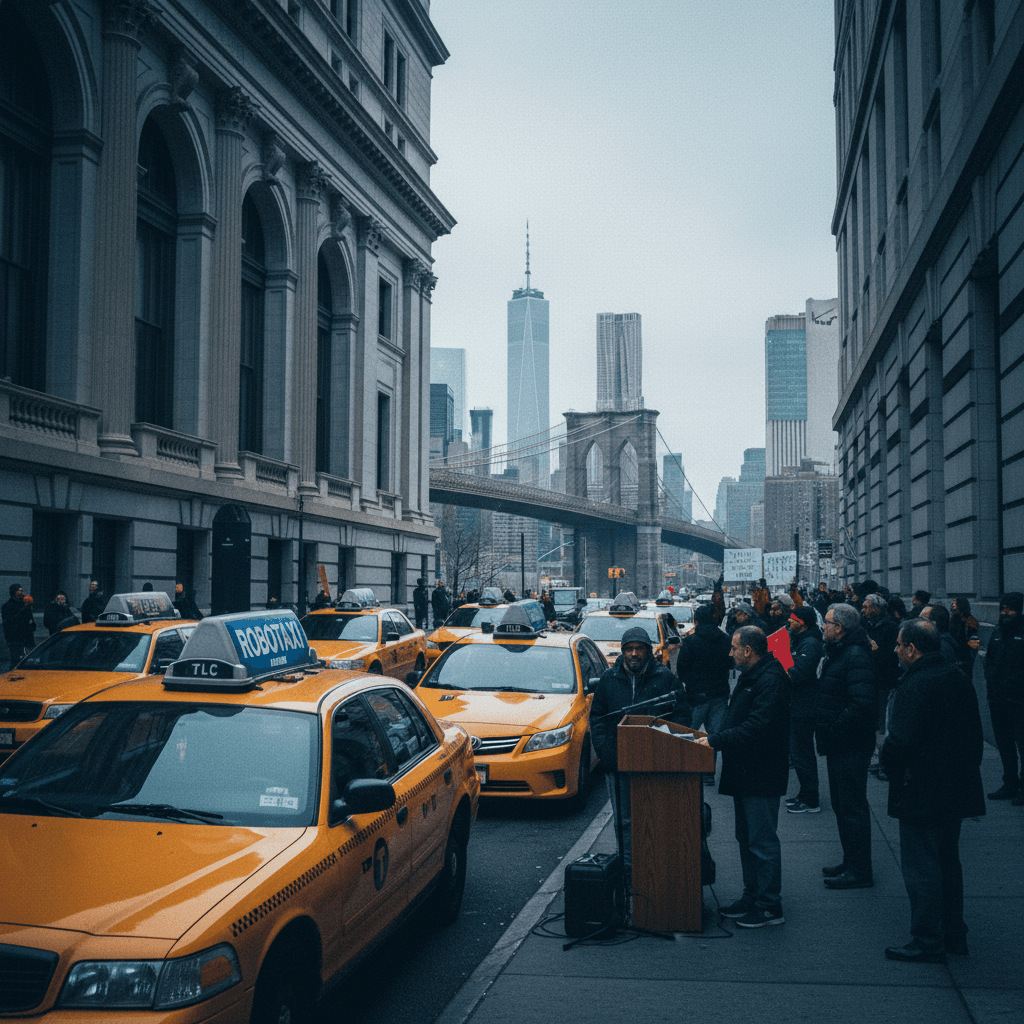
Lyft, Uber, and Tesla are racing to deploy autonomous vehicles in 2026. What does this mean for NYC TLC drivers? A critical analysis of the robotaxi threat and how drivers can adapt.
The Robotaxi Revolution Is Here: What NYC TLC Drivers Need to Know
The rideshare industry is at an inflection point. By late 2026, multiple companies will deploy autonomous vehicles on streets across America, including potentially in New York City. Lyft is rolling out electric, driverless Holon Urban shuttles powered by Mobileye's Level 4 autonomy technology in Dallas and Atlanta. Uber has unveiled luxury robotaxis through partnerships with Lucid Group and Nuro, with production beginning in 2026. Tesla plans to reveal its dedicated robotaxi vehicle, while Waymo already has eight test vehicles operating in NYC (though still requiring safety drivers).
For NYC TLC drivers, this represents both a threat and an opportunity. The question isn't whether robotaxis are coming, but how TLC drivers can position themselves as autonomous vehicle adoption accelerates.
Governor Hochul's Robotaxi Proposal: A Game Changer for NYC
In January 2026, New York Governor Kathy Hochul proposed allowing a limited number of autonomous vehicle licenses to operate without human drivers outside New York City. Currently, all robotaxi test vehicles in NYC must have a safety operator at the wheel. The governor's proposal signals that fully driverless operations could arrive sooner than many expected.
This development has sparked legitimate concerns among for-hire vehicle drivers and fleet owners. Waymo, the autonomous rideshare company backed by Alphabet, has been conducting limited tests in the city. If the governor's proposal moves forward, Waymo and other robotaxi operators could expand significantly.
For TLC plate rent drivers and TLC car rent operators, this regulatory shift is crucial to monitor. The proposal suggests that regulators are preparing the pathway for autonomous vehicles, even as human drivers still make up the overwhelming majority of rideshare trips.
The Numbers: Job Impact and Market Reality
Let's be clear about the scale. In November 2025, Uber and Lyft averaged 693,941 daily trips across NYC. These companies controlled 75.5% of the legal NYC trip market, with a combined market share potentially reaching 78.6% when including yellow cab taxi dispatches.
Currently, every single one of these trips requires a human driver. The transition to autonomous vehicles won't happen overnight, but the industry timeline is accelerating. Lyft's 2026 robotaxi launch is scheduled to begin in two major cities, with expansion likely following if results meet projections.
For NYC TLC drivers, the implications are serious. While robotaxis will likely start in limited geographies (airport corridors, downtown hubs, transit centers), the long-term trajectory is clear. The question becomes: what happens to TLC drivers as this technology scales?
Why Robotaxis Won't Replace Drivers Immediately (But Will Eventually)
Here's the nuanced reality that every TLC driver needs to understand: the autonomous vehicle transition will be gradual but inevitable.
Several factors will slow the immediate impact:
Regulatory Hurdles: Even after Governor Hochul's proposal, New York will impose strict regulations. The eight Waymo test vehicles currently operating in NYC demonstrate how cautiously regulators are approaching full autonomy. Full-scale deployment likely requires months or years of additional testing, data collection, and regulatory approval.
Technology Limitations: Current autonomous systems struggle in harsh weather, complex urban environments, and edge cases. NYC's infamous winters, tight street layouts, and unpredictable traffic patterns are particularly challenging for Level 4 autonomy. Tesla's Full Self-Driving (FSD) software still requires a safety driver in most jurisdictions, despite CEO Elon Musk's optimistic claims.
Economic Realities: Robotaxis work best for predictable routes: airport runs, intercity commutes, and downtown business corridors. For random pickup-and-dropoff trips across all five boroughs, human drivers remain more flexible and reliable. The utilization rate of autonomous vehicles may not match human driver efficiency, especially during off-peak hours.
Cost Structure: While autonomous vehicles eliminate driver labor, they require expensive vehicle maintenance, charging infrastructure, data processing, insurance, and continuous software updates. These operational costs may ultimately make human driver rideshare more economical than some analysts predict.
California's Lead: What NYC Can Learn
Interestingly, while robotaxis dominate headlines, California just established collective bargaining rights for rideshare drivers. Starting January 1, 2026, the state's 800,000 rideshare drivers gained the right to unionize after a deal between Governor Gavin Newsom, organized labor, and companies including Uber and Lyft.
This move by California is instructive for New York. The rideshare giants agreed to expand collective bargaining rights in exchange for lawmakers reducing the companies' insurance costs for underinsured drivers. It's a trade-off: workers gain representation, companies gain regulatory relief.
For NYC TLC drivers and fleet owners, this suggests that collective advocacy and unionization could be powerful tools. Rather than passively watching robotaxis arrive, TLC drivers should consider organized efforts to secure:
Minimum pay standards (like those recently won in Maine)
Better benefits and working conditions
Transition support if robotaxi deployment accelerates
Priority access to autonomous vehicle operator positions
How NYC TLC Drivers Can Adapt Right Now
Waiting for robotaxis to arrive while passively continuing current work is not a viable long-term strategy. Here's what forward-thinking TLC drivers should do in 2026:
1. Diversify Your Income Streams
Don't rely solely on standard Uber and Lyft trips. The data shows that rideshare market growth is happening, but it's not evenly distributed. Explore:
NEMT (Non-Emergency Medical Transport): These trips pay well, require less competition from robotaxis, and involve elderly/disabled passengers who prefer human drivers.
Corporate partnerships: Some companies prefer direct driver relationships for executive transportation.
Airport and hotel contracts: More stable, contractual work that's harder to automate initially.
2. Invest in Your Vehicle and Certifications
The TLC Green Rides mandate requires 25% of Uber and Lyft trips to be in electric vehicles or wheelchair-accessible vehicles by 2026. This requirement creates opportunity for drivers who own electric vehicles. In November 2025, 22.7% of NYC Uber and Lyft trips were already completed in EVs or WAVs.
If you're considering a TLC car rent arrangement or purchasing a vehicle, prioritize electric options. These vehicles:
Meet regulatory requirements
Reduce operating costs
Appeal to environmentally conscious riders
May command higher rates or preferential positioning on apps
3. Build Direct Client Relationships
While rideshare apps connect drivers to passengers, autonomous vehicles don't need personal relationships. Human advantages include:
Regular customers who request specific drivers
Repeat business from corporate clients
Personal recommendations in neighborhoods
Specialized services (airport expertise, multilingual capability, comfort features)
Invest in service quality and customer retention. Word-of-mouth and repeat business are barriers that robotaxis can't easily overcome.
4. Stay Informed on Regulatory Developments
Governor Hochul's robotaxi proposal is just the beginning. New regulations could include:
Robotaxi license caps
Zones where human drivers are required
Revenue-sharing between autonomous operators and traditional rideshare drivers
Transition assistance programs
Join TLC driver associations or online communities to stay informed. Early awareness of regulatory changes gives you time to adapt.
The Fleet Owner Perspective: Rising Pressure and Strategic Response
TLC Fleet owners face particular pressure in 2026. Operating a fleet means managing multiple variables: vehicle acquisition, driver recruitment, insurance costs, compliance, and now, technological disruption.
Fleet owners should consider:
Specialization: Rather than competing on volume with robotaxi companies, specialize in services robotaxis can't provide initially. Wheelchair-accessible services, luxury experiences, corporate contracts, and specialized transport (medical, luxury goods, high-security clients) create defensible market positions.
Technology Investment: Some fleet operators are exploring autonomous vehicle integration themselves. Lyft's "Lyft Ready" program enables personally owned autonomous vehicles on its platform. Forward-thinking fleet owners might investigate how to participate in this ecosystem rather than just compete against it.
Driver Retention: In a tightening labor market, fleet owners who offer better pay, benefits, and working conditions will retain the best drivers. Given California's new unionization rights, collective agreements may become necessary in New York too. Being ahead of this curve is strategically wise.
Cost Management: Rising insurance costs, TLC plate rent expenses, and vehicle acquisition costs all squeeze fleet margins. Strategic partnerships with insurance providers, vehicle leasing companies, and charging infrastructure operators could reduce costs and improve competitiveness.
What 2026 Really Means: Adaptation Over Panic
The reality is that 2026 won't be the year robotaxis replace NYC TLC drivers. But it will be the year that serious autonomous vehicle deployment begins, making robotaxi competition real rather than theoretical.
For TLC drivers and fleet owners, the key is strategic adaptation now, not reactive adjustment later. The rideshare industry data shows continued growth: November 2025 saw 4.2% year-over-year growth in Uber and Lyft trips. This growth will continue through 2026, even as robotaxis begin deployment.
However, growth alone isn't protection. The drivers and fleet owners who thrive will be those who:
Diversify income sources
Invest in vehicles and services that align with emerging market demands
Build direct client relationships
Stay informed on regulatory changes
Advocate collectively for driver protections
* Embrace complementary technologies rather than resist them
The robotaxi revolution is coming. The question for NYC TLC drivers isn't whether to accept this, but how to shape it to your advantage. 2026 is the time to make that strategic shift.
Final Thoughts: Opportunity Within Challenge
Yes, Lyft's robotaxi launch in 2026 and Uber's autonomous vehicle expansion represent real competitive threats. Governor Hochul's proposal to allow driverless operation signals regulatory acceptance of the technology. But for NYC TLC drivers and fleet owners willing to adapt, these changes also create opportunity.
The rideshare industry is evolving from a simple driver-to-passenger-app model into a complex ecosystem with multiple transportation modes, service tiers, and business models. TLC drivers who position themselves strategically will find plenty of work, better pay, and more job security than those who passively wait for robotaxis to arrive.
Start planning your adaptation strategy now. The future of rideshare in NYC will be written by drivers and fleet operators who act deliberately today.